
Intermediate Rock Composition and Examples
Intermediate igneous rocks are medium in silica (52-63 wt.%) and have nearly equal amounts of felsic and mafic minerals. Examples are andesite and diorite. Felsic

Intermediate igneous rocks are medium in silica (52-63 wt.%) and have nearly equal amounts of felsic and mafic minerals. Examples are andesite and diorite. Felsic

Ultramafic rocks are igneous or metamorphosized igneous rocks that are very low in silica (usually less than 45 wt.%) and with more than 18% magnesium

Felsic and mafic are field terms we use to classify igneous rocks, their magma, or lava. This classification is based on their mineral composition, i.e.,

Felsic describes rocks, magma, or lava high in silica and felsic minerals. Felsic minerals are rock-forming silicates high in silicon, oxygen, aluminum, potassium, and sodium.
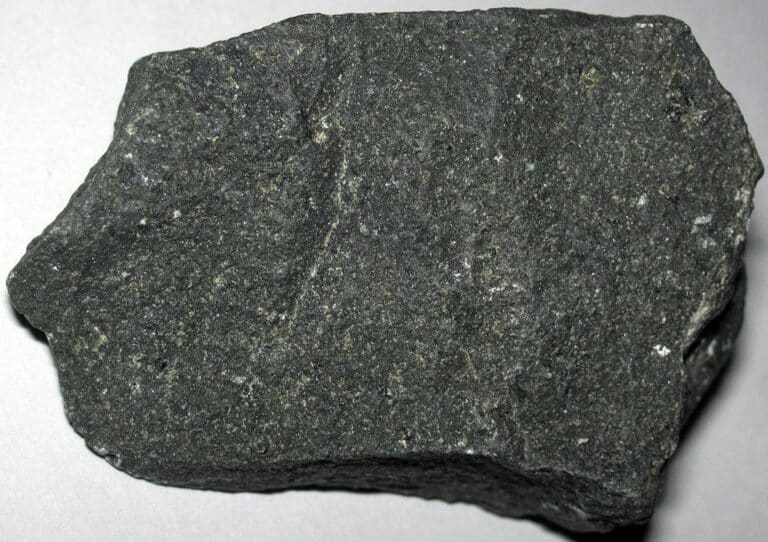
Mafic rocks, minerals, and magmas are common terms in geology, geosciences, or Earth sciences. You often come across them in igneous rocks and when looking
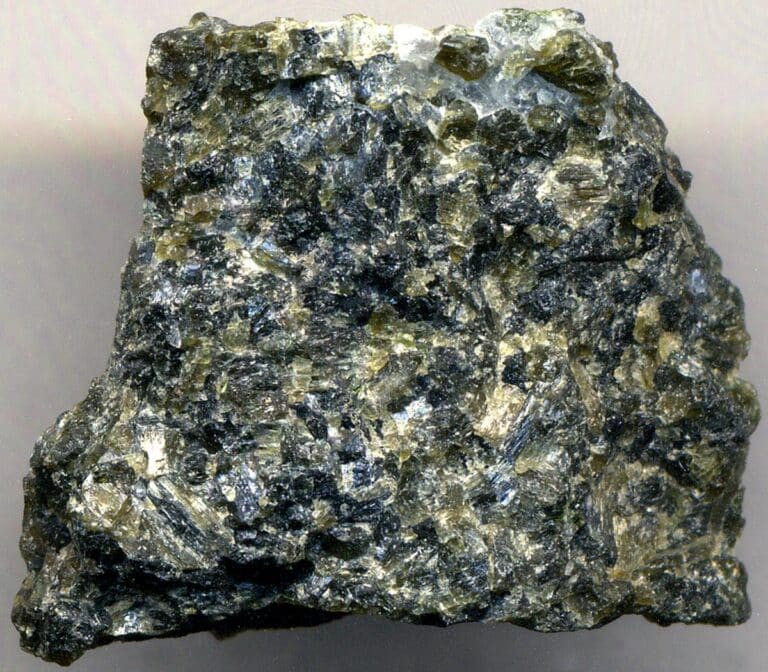
Harzburgite is a coarse-grained, dark-colored ultramafic plutonic rock. It has mainly olivine, orthopyroxene, and a small amount of clinopyroxene. Ultramafic rocks are low in silica

Xenoliths are foreign rock pieces or fragments trapped in an igneous rock body (host). However, a broader definition will include foreign rocks trapped in sedimentary

Xenocrysts refer to mineral crystals trapped or caught up in an igneous rock. These crystals are foreign (alien) to the rock they occur in. By

Troctolite is a coarse-grained intrusive igneous rock. It has mainly variable amounts of olivine, calcic plagioclase, and minor pyroxene. Its composition lies between anorthosite, where