
What Are Volcanic Breccias, Types and Formation
Volcanic breccia are rocks comprised mostly of large, angular to semi-angular, broken pieces of rocks or minerals. These fragments or clasts may or may not

Volcanic breccia are rocks comprised mostly of large, angular to semi-angular, broken pieces of rocks or minerals. These fragments or clasts may or may not

Pyroclastic rocks formed from deposited fragmented materials generated and ejected during explosive eruptions. Examples include ash tuff, tuff breccia, pyroclastic breccia, agglomerate, lapilli tuff, lapillistone,

Tuff or ash tuff is a pyroclastic rock with at least 75% volcanic ash. Volcanic ash are particles no more than 2 mm ejected during

Phreatomagmatic eruptions occur when rising magma interacts with external surface water such as a shallow lake, sea, or groundwater. Some authors call them hydromagmatic eruptions.

Lherzolite is a coarse-grained ultramafic rock with 40-90% olivine. Ultramafic rocks have less than 45% silica (SiO2) and more than 90% mafic minerals. Mafic minerals

Hyaloclastites are an accumulation of angular basaltic glass fragments or their breccia. A breccia is a rock with volcanic fragments cemented in a fine-grained matrix.
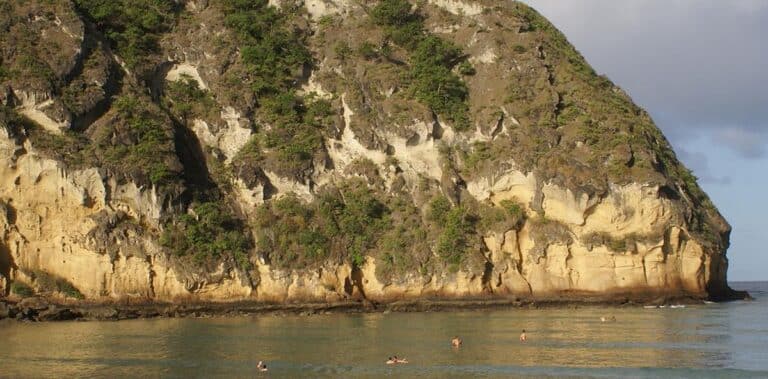
Palagonite is a yellow, yellow-orange, or brownish material formed from the alteration of basaltic or glass with a chemical composition like basalt. However, it may

Tachylite rock is an opaque black or brown basaltic glass with a greasy look and a resinous luster. It is a natural volcanic glass that

Sideromelane is a transparent or clear brownish or yellow-brown colored basaltic glass. It forms from rapid quenching of basaltic magma mostly (but not exclusively) in