
What Are Volcanic Breccias, Types and Formation
Volcanic breccia are rocks comprised mostly of large, angular to semi-angular, broken pieces of rocks or minerals. These fragments or clasts may or may not

Volcanic breccia are rocks comprised mostly of large, angular to semi-angular, broken pieces of rocks or minerals. These fragments or clasts may or may not

Pyroclastic rocks formed from deposited fragmented materials generated and ejected during explosive eruptions. Examples include ash tuff, tuff breccia, pyroclastic breccia, agglomerate, lapilli tuff, lapillistone,

Tuff or ash tuff is a pyroclastic rock with at least 75% volcanic ash. Volcanic ash are particles no more than 2 mm ejected during

Hyaloclastites are an accumulation of angular basaltic glass fragments or their breccia. A breccia is a rock with volcanic fragments cemented in a fine-grained matrix.

An ignimbrite or ash-flow tuff is a type of volcanic rock formed from pyroclastic flow deposits. It has poorly sorted pumice fragments, scattered lithic fragments,

Lapilli tuff and lapillistone refer to a pyroclastic rock formed from predominantly lapilli-sized (2-64 mm) pyroclasts ejected during an explosive volcanic eruption. These rocks can

A pyroclastic breccia is a volcanic rock with predominantly angular rock fragments larger than 64 mm (volcanic blocks) set in a finer grain matrix such
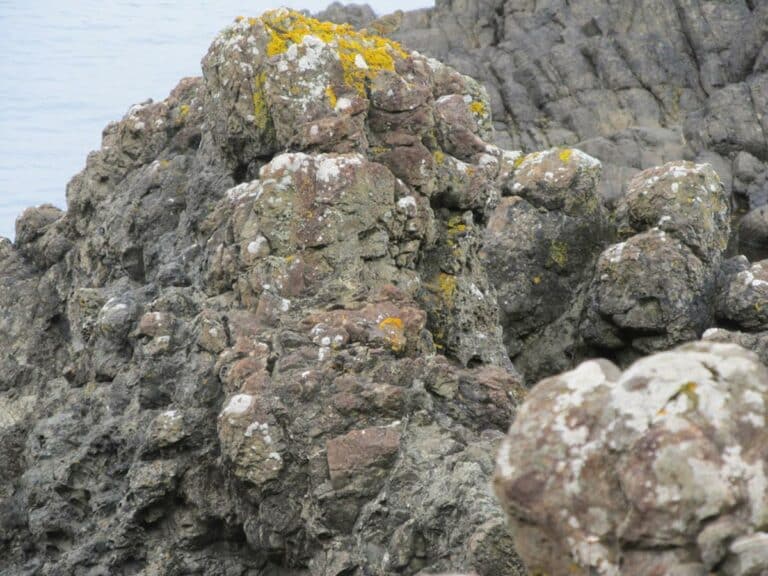
Agglomerates refer to the accumulation of coarse volcanic material (clasts, lava) and sometimes country rock fragments with at least 75% bombs set in a finer-grained matrix