
What Is a Pyroclastic Breccia and How Does It Form?
A pyroclastic breccia is a volcanic rock with predominantly angular rock fragments larger than 64 mm (volcanic blocks) set in a finer grain matrix such

A pyroclastic breccia is a volcanic rock with predominantly angular rock fragments larger than 64 mm (volcanic blocks) set in a finer grain matrix such
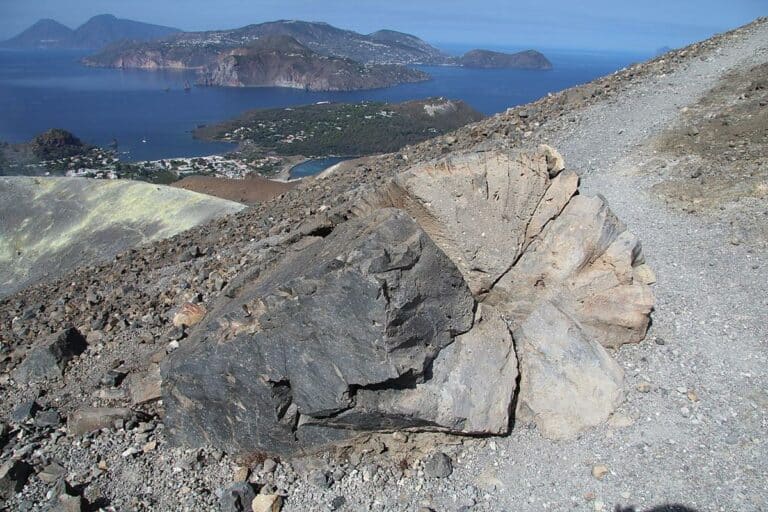
Volcanic blocks are angular to sub-angular rock fragments measuring more than 64 mm (2.5 inches) in size blasted into the air while in solid form

Lava or volcanic bombs are rounded to ellipsoid masses of lava measuring at least 2.5 inches ejected during a volcanic eruption. They get their aerodynamic
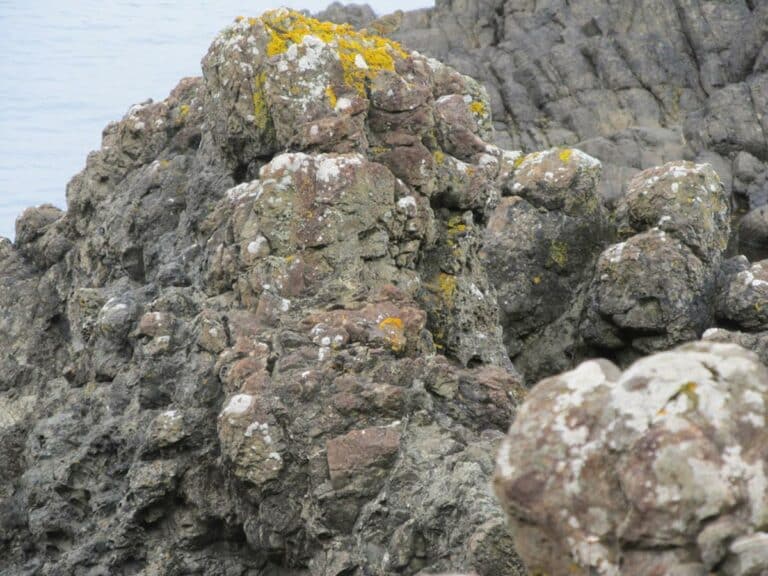
Agglomerates refer to the accumulation of coarse volcanic material (clasts, lava) and sometimes country rock fragments with at least 75% bombs set in a finer-grained matrix
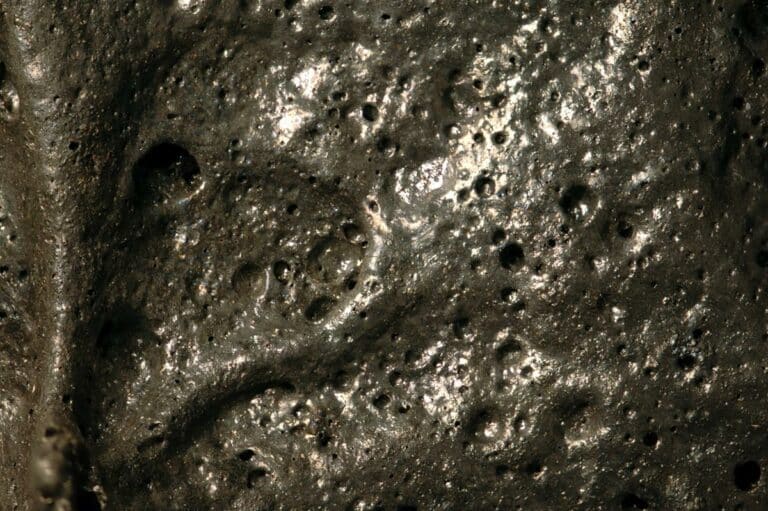
Volcanic glass is an amorphous or uncrystallized extrusive igneous rock. It forms from the rapid cooling or quenching of magma that doesn’t allow crystallization. Such

Glassy or vitreous rock texture describes the texture of amorphous solid volcanic glasses. Rocks with this texture form when magma or lava cools rapidly or

Most pegmatites have a granitic rock composition. However, some may have intermediate to mafic composition but are rare. An example of a mafic pegmatite is

Granite pegmatites are intrusive igneous rock with granitic composition and unusually large crystals, i.e., more than 0.4 inches (1 cm) with larger crystals more than 1.2 inches

Graphic granite refers to granitic rocks with quartz-alkali feldspar intimate intergrowths whose texture or pattern resembles ancient cuneiform or runic writings or inscriptions. These rocks