
Burial metamorphism is a low-grade regional metamorphism. It occurs when pressure and temperature cause minerals in deeply buried sedimentary and volcanic rocks to partially or fully recrystallize with no associated deformation or magmatism. Some authors may describe it as load or depth recrystallization.
While working on the South Island of New Zealand, Coombs (1961) recognized this special regional metamorphism and called it burial metamorphism. He and his friends felt the need to systematically consider it a low-grade metamorphism kind, not just random, senseless alterations.
Something worth noting is that this type of metamorphism relates intimately with diagenesis in sedimentary rock. Usually, diagenesis grades into or overlaps it, to some extent, as temperature increases. However, as we will see later, these two are different.
This post looks into burial metamorphism, including its meaning, formation conditions, and facies. We will also give examples of where it occurs and its significance to petrologists.
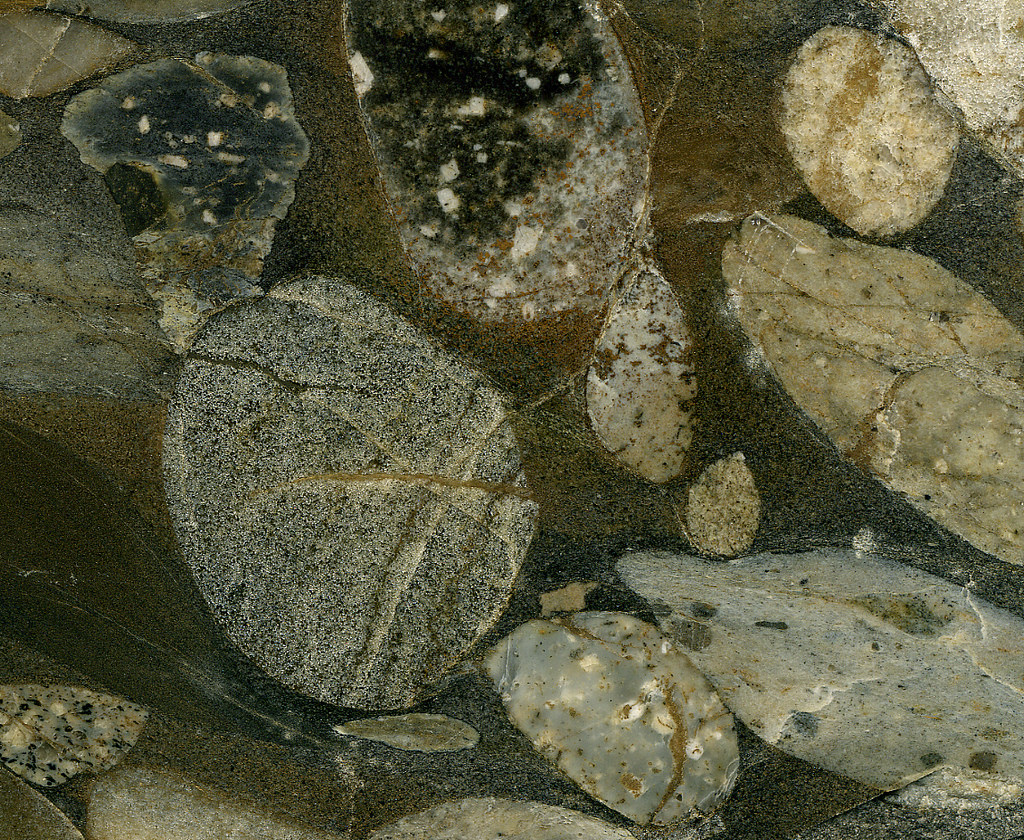
What is burial metamorphism?
Burial metamorphism occurs when the confining pressure and heat cause constituents of deeply buried sedimentary or volcanic (volcanic and volcaniclastic) piles to recrystallize without associated deformation or magmatism. It is usually regional but can be local and often involve hydrothermal fluids.
The confining pressure is from the overlaying pile. It doesn’t involve differential or deviatoric stress. Thus, no significant deformation occurs, except normal stress or overburden of the overlying rocks or sediments.
On the other hand, heat is only from an increase in depth, i.e., it doesn’t need more. However, the change in the heat with depth will depend on the geothermal gradient.
Where does it occur? Burial metamorphism occurs mainly in geosyncline or subsiding basins with sedimentary, volcanic, or volcaniclastic rocks away from active continental plate margins. However, it may occur in rift zones but is not common.
Lastly, it involves rocks susceptible to recrystallization at low temperatures since it is the lowest grade of metamorphism. These include greywackes, volcanic tuff, and volcanic glass shards. However, it may involve shale, slates, and other sedimentary rocks.
Textural fabric and volume changes
Burial metamorphism causes a substantial change in mineralogical assemblages. However, it occurs under low pressure and temperature, i.e., low grade.
Under these conditions, transformation or recrystallization occurs while preserving most of the parent rock’s delicate volcanic (protoliths) and sedimentary rock structures. New minerals occur in interstices, vesicles, veins, fine matrix, or alteration zones.
Therefore, metamorphosized rocks will largely show their original texture and fabric. Additionally, there will be no schistosity and penetrative fabrics like foliation or slaty cleavage.
Furthermore, these rocks will show relict grains, partial to complete pseudomorphic replacement and transformation. This happens because such low-grade reactions involved approach equilibrium very slowly.
Lastly, there is no large change in the volume of rocks involved.
Formation conditions
Burial metamorphism mostly starts at 100 – 200°C, corresponding to about 6-8 km depths under normal thermal gradient. It ends at 350°C with a typical pressure below 0.3GPa.
However, depths will vary depending on the thermal gradient and the minerals’ chemistry. Also, other physical variables may come into play, including fluid composition.
For instance, rift basins tend to have a high thermal gradient. Thus, this metamorphism can occur in shallower depths.
Similarly, it happens at lower depths in Rotorua, New Zealand, and the Salton Sea, California, USA.
Facies and geothermal gradient
The main burial metamorphism facies are zeolite and prehnite-pumpellyite. Let us look at each.
1. Zeolite facies
Zeolite facies are transitional between diagenesis and prehnite-pumpellyite facies. Depending on the geothermal gradient, they start at about 1 to 5 km, corresponding to 50° to 150°C.
These facies are marked by the appearance of water-rich minerals like wairakite, laumontite, sometimes albite, and less often adularia.
2. Prehnite-pumpellyite facies
An increase in depth and temperature transforms zeolite facies to prehnite-pumpellyite facies, which lie above greenschist facies. This facies is also common in oceanic crust and mid-ocean ridges.
Transition to prehnite-pumpellyite facies starts at 3-13km depths and up to 250°C. The upper limit is hard to determine since mineral chemistry is below greenschist facies, i.e., below 400 °C.
According to Blatt & Tracty (2006), eliminating laumontite in aluminous rich composition marks the prehnite—pumpellyite facies. Also, prehnite, pumpellyite, calcite, and quartz will appear.
Lastly, epidote and sometimes actinolite may appear. However, carbon-free rocks will have actinolite if prehnite is present.
4. Geothermal gradient and mineral assemblage
Besides these facies, geothermal gradient (how fast temperature changes with depth) affects mineral assemblage.
For instance, Atherton (1989) notes that zeolites, mordenite, stilbite, heulandite, yugawaralite, laumontite wairakite, and analcime occur in higher geotherm gradients.
In contrast, the lower geothermal gradient will have analcime, heulandite, and, less often, laumontite.
Burial metamorphism vs. diagenesis
Diagenesis grades, merges, or even overlaps into burial metamorphism. Furthermore, both may have the same reactions and products.
Also, the newly formed metamorphism mineral assemblage resembles the inherited relict (original or parent) minerals. This makes it hard to identify low-grade metamorphic changes in hand specimens.
While it is hard to pinpoint where one ends and the other begins, especially in deep-seated diagenesis, these two processes are different.
A thin-section observation in a petrographic microscope or X-ray diffraction can distinguish the fine-grained minerals. Thus, you can determine metamorphosed and non-metamorphosed rocks.
Usually, non-metamorphosed rocks will have glass, volcanic minerals, rock fragments, and analcite. Also, they will have sedimentary zeolites like mordenite, clinoptilolite and heulandite.
On the other hand, metamorphosed rocks will not have detrital minerals, diagenetic sediments, or non-metamorphized rocks. Instead, they will have mainly transitional minerals between clays and micas.
Also, minerals like chlorite, epidote in mafic rocks, or muscovite in mudrock indicate metamorphism. Others are silicate laumontite, lawsonite, albite, other framework silicates (other zeolites), and sheet silicates like illite.
Therefore, you can know diagenesis boundaries by looking at the above mineral assemblages.
Lastly, in most cases, diagenesis is completed long before burial metamorphism starts.
Where does burial metamorphism occur?
Burial metamorphism occurs in geosyncline with undisturbed, thick sediments, sedimentary rocks, and layered volcanic rocks away from active plate margins. Usually, it has a regional extent.
Most of these places have hydrothermal fluids. However, burial is not the same as hydrothermal metamorphism.
Rocks metamorphosed are in the deepest ends of subsiding basins. Also, these rocks are sensitive to recrystallization at low temperatures and include greywackes, volcanic pyroclasts, volcanic tuff, shale, slates, and marls.
Let us consider the type locality of burial metamorphism, i.e., the southern South Island of New Zealand. It has voluminous Permian to Jurassic sedimentation and some volcanic rocks like volcanic tuff and graywackes in deep troughs in subsiding areas. These areas aren’t associated with much deformation or intrusions.
Sediments underwent diagenesis to form sedimentary rocks. Then, low-grade burial metamorphism followed during the Cretaceous, aided by hydrothermal fluids characteristic of this place.
These fine-grained and immature rocks (volcanic tuff and greywacke) were susceptible even to low-grade metamorphism. However, pelitic sediments didn’t react until temperatures were high.
Away from rocks in the type locality above, marls, shales, and slates may also undergo burial metamorphism. For instance, minerals like illite, paragonite, stilpnomelane, paragonite-muscovite, chlorite pyrophyllite, and, less often, chloritoid confirm it occurs in shales and slates.
Burial metamorphism may occur in rift basins. However, such must accumulate sediments or layered volcanic rocks quickly. An example is the Mesozoic rift basins in North America, not associated with orogenic activities. This zone has sensitive fine-grained minerals and glass shards in mudrock basaltic flows and tuffs.
Going to specific locations besides New Zealand, Bucher (2023) notes burial metamorphism is known to occur in Japan, eastern Australia, Chile, and elsewhere.
Modern examples are the Gulf of Mexico, fed by the Mississippi River, and Bengal Fan, provided by the Ganges and Brahmaputra rivers, notes Winter (2014).
Significance
Oil and gas industries define their economic basement at temperatures and depths where burial metamorphism occurs. It is here where the formation and migration of oil or gas from its source rocks to reservoirs happens, notes Blatt & Tracy (2006). Studies from the most prominent oil basins have shown.
No oil occurs at higher temperatures than for this low-grade metamorphism. Why? Because high temperatures will turn organic matter into carbon dioxide, not crude oil or natural gas.
Frequently asked questions
It refers to burial metamorphism at extensional tectonic settings characterized by enhanced heat flow. An example is in the Welsh Basin. Bucher (2023).
Burial-like metamorphism can occur at the lower portion of the thick sedimentary pile that fills trenches. Depending on P and T conditions, those at deeper depths will form other facies like blueschist, amphibolite facies, etc.
References
- Blatt, H., Tracy, R. J., & Owens, B. E. (2006). Petrology: Igneous, sedimentary, and metamorphic (3rd ed.). W.H. Freeman and Company
- Atherton, M. P. (1989). Burial metamorphism. In Bowes, D. R. (ed.). The encyclopedia of igneous and metamorphic petrology (pp. 70-72). New York: Van Nostrand Reinhold.
- Best, M. G. (2013). Igneous and metamorphic petrology (2nd ed.). Blackwell Publishers.
- Winter, J. D. (2014). Principles of igneous and Metamorphic Petrology. Pearson Education.
- Bucher, K. (2023). Petrogenesis of metamorphic rocks (9th ed.). Springer.
- Coombs, D. S. (1961). Some recent work on the lower grades of metamorphism. Australian Journal of Science, 24, 203-215.